

Sunset Tourmaline is a multicolored variety within the elbaite species of the tourmaline group, a complex borosilicate mineral characterized by the general chemical formula Na(Li,Al)₃Al₆(BO₃)₃Si₆O₁₈(OH)₄. It crystallizes in the trigonal crystal system and typically forms elongated prismatic crystals with strong vertical striations along the length of the crystal faces. Sunset Tourmaline displays a distinctive gradient of warm coloration that commonly ranges from saturated pink and rose tones through orange and golden hues. These color transitions occur within a single crystal due to changing trace element concentrations during growth, particularly variations in manganese and lithium.
The luster of Sunset Tourmaline is vitreous, with well formed crystals often showing strong transparency to translucent clarity depending on internal inclusions and growth interruptions. Color zoning in this variety develops during sequential stages of crystallization within pegmatitic environments, where hydrothermal fluids deposit elements in evolving chemical conditions. These pegmatites form during the late stages of granitic magma cooling, allowing large crystals to grow slowly within cavities where mineral rich fluids circulate. The layered chemistry of these fluids produces the distinct banded or gradient coloration that defines Sunset Tourmaline.
Optical behavior in Sunset Tourmaline is influenced by its strongly anisotropic crystal structure. Tourmaline crystals exhibit pronounced pleochroism, meaning they can display different colors when viewed along different crystallographic directions due to selective absorption of polarized light. This optical property is particularly noticeable in bicolored and multicolored crystals, where internal structural orientation guides the transmission of light through zones of varying chemical composition. Well formed specimens are most commonly recovered from lithium rich pegmatite deposits, with notable occurrences in Brazil, Afghanistan, Nigeria, Madagascar, and Mozambique.
The name tourmaline derives from the Sinhalese word “turmali,” a historical trade term used in Sri Lanka for mixed colored gemstones brought to European markets during the eighteenth century. Early mineral traders grouped a wide range of colorful stones under this term before the mineral was scientifically classified. As mineralogy advanced during the eighteenth and nineteenth centuries, tourmaline was recognized as a distinct borosilicate mineral group with multiple species including elbaite, schorl, dravite, and others.
Enchanting Earth coined the trade name Sunset Tourmaline to describe crystals displaying a naturally blended spectrum of pink, orange, and golden tones that resemble the color gradations observed at sunset. These specimens are primarily associated with pegmatite mines in Brazil and Afghanistan where elbaite crystals can develop complex color zoning during crystal growth. While tourmaline has a long documented history in gem trade and mineral collections, the designation Sunset Tourmaline is a modern descriptive term rather than a historically formal mineral name.
Sunset Tourmaline carries a warm and uplifting energy that many people experience as mood lifting and clarifying. Its coloration is often associated with emotional openness, helping soften rigidity and encouraging honest expression of feelings that may otherwise remain guarded. When held or worn, Sunset Tourmaline softens emotions and invites a sense of optimism that makes difficult conversations or shadow work feel more approachable.
Sunset Tourmaline is often connected with the heart and creative intuition. Practitioners describe it as encouraging authenticity by aligning emotional awareness with intuitive insight. Rather than overwhelming the senses, it tends to bring a balanced awareness of both feeling and inner guidance. Many people use Sunset Tourmaline during reflective meditation or journaling when exploring relationships, life direction, or creative expression.
The energy of Sunset Tourmaline is often experienced as flowing upward through the body while simultaneously radiating outward through the chest area. The pink tones are frequently felt as expanding through the heart center, while the orange tones stimulate motivation and creative flow through the lower energy centers. This combined movement creates a circulating pattern where emotional clarity rises through the body and expressive action moves outward into daily life.
Hardness: 7-7.5
Color: Pink, rose, peach, orange, golden orange, and warm sunset gradients
Structure: Trigonal
Care: Avoid prolonged exposure to heat (or extreme heat), direct sunlight and contact with water, abrasive surfaces or chemicals. Remove before contact sports, weight lifting or activities where it may come into contact with force. As always, minerals higher on the hardness scale should be stored away from it.
Cleaning: Warm water, mild soap, and soft cloth.
Feng Shui Placement: In the Relationship corner of the home or bedroom (the back right area of the home according to the Bagua map), Sunset Tourmaline is believed to encourage openness, affection, and harmonious communication between partners. In a creative studio, office, or workspace, Sunset Tourmaline is thought to stimulate imagination and help ideas move from inspiration into action. Many people place it on a desk or near creative tools to encourage expressive flow.

Metaphysical properties
♡ Chakra: Heart, Solar Plexus, Sacral and Root
♡ Element: Air, Fire, Water, Earth
♡ Numerology: 6
♡ Zodiac Sign: Libra, Leo, Sagitarrius, Aries
♡ Brings joy, warmth and creative inspiration
♡ Enhances openness in communication and relationships
♡ Helps release emotional blocks and guarded patterns
♡ Promotes confidence in authentic self expression
♡ Supports the reproductive system
Use + Crystal pairings
Sunset Tourmaline is often worn close to the heart as jewelry or held in the hands during reflection when emotions feel overwhelming or difficult to articulate. Many people place Sunset Tourmaline over the heart or just below the collarbone during meditation, allowing the warmth of its color to draw attention inward toward feelings that need honesty, softness, or renewed optimism.
Sunset Tourmaline occupies a fascinating space between geological beauty and symbolism. The layered color transitions that formed during its growth record shifting mineral conditions deep within pegmatites. Those same gradients of pink and orange often remind collectors and practitioners of the way emotional states shift and evolve across time.
Rhodochrosite + Sunset Tourmaline
This pairing is deeply supportive for emotional healing and compassionate self understanding. Rhodochrosite and Sunset Tourmaline work together to soften emotional defenses while encouraging honest reflection about relationships and personal patterns. Rhodochrosite opens the heart to forgiveness and self acceptance, while Sunset Tourmaline encourages warmth, optimism, and the courage to express what you truly feel.
Sunstone + Sunset Tourmaline
Sunstone and Sunset Tourmaline create a vibrant combination for creativity, confidence, and joyful motivation. Sunstone carries a bright, encouraging energy that sparks personal power and enthusiasm, while Sunset Tourmaline brings creativity and expression. Together they help transform inspiration into action, making this pairing wonderful for artists, entrepreneurs, and anyone beginning a new creative chapter.
Kunzite + Sunset Tourmaline
Kunzite and Sunset Tourmaline form a beautiful partnership for heart centered awareness and emotional clarity. Kunzite draws attention inward toward the deeper layers of the heart while Sunset Tourmaline helps translate those feelings into honest communication. Meditating with these stones together can deepen understanding within relationships and encourage conversations that are sincere, loving, and transparent.

PRODUCT TITLE
Affirmation: I express my heart with honesty and creative joy.
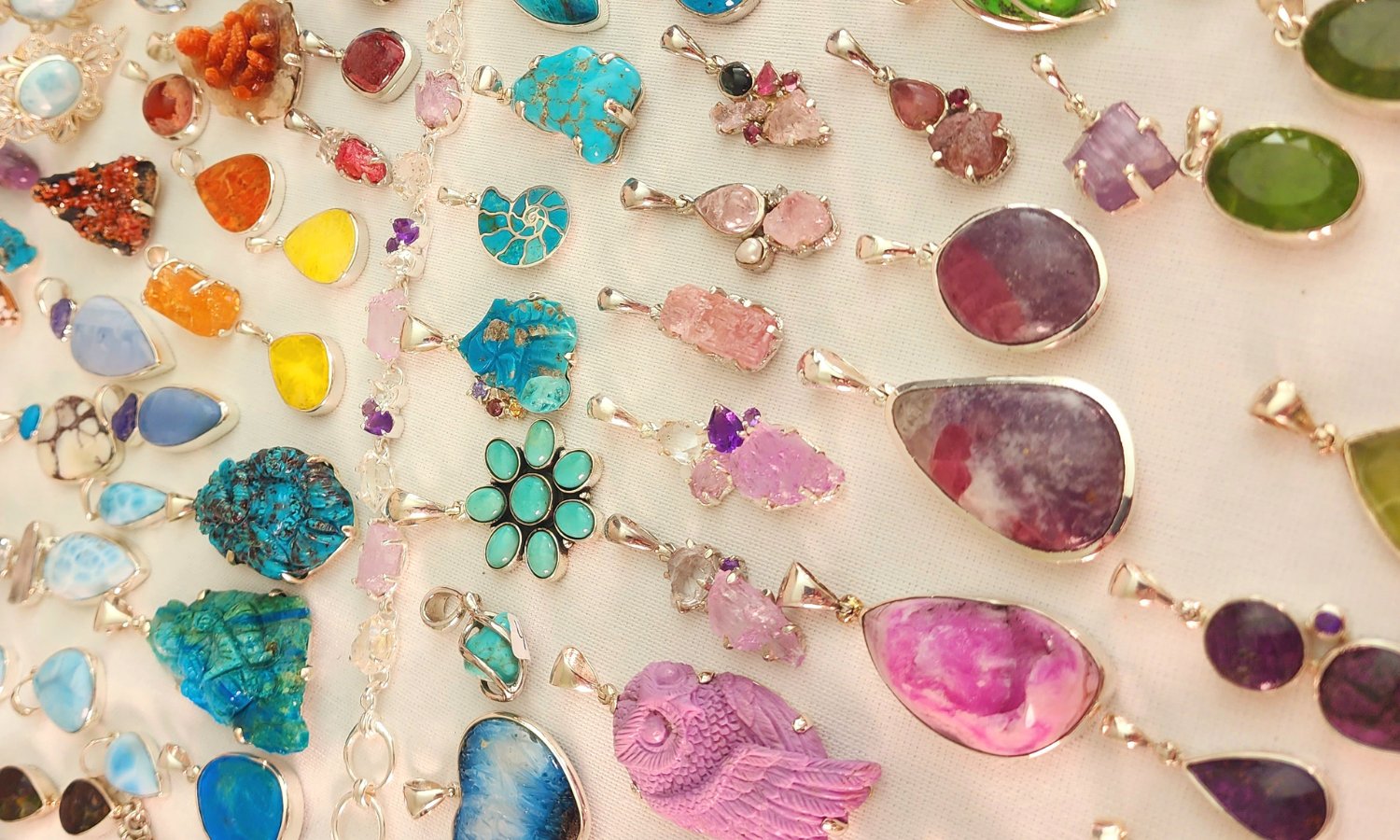
New custom Sunset Tourmaline jewelry will be available on this week's Instagram live sales on Thursday, March 19 from 4-8 pm PST and Sunday, March 22 from 9-1 pm PST! New arrivals will be released to our website Friday, March 20 @ 4 pm PST!!
PRODUCT TITLE

PRODUCT TITLE

PRODUCT TITLE

Jamie Inglett
Jamie Inglett is an intuitive healer, author, founder and CEO of Enchanting Earth; a luxury gemstone jewelry and crystal shop with a storefront in Sedona, Arizona. Known for her deep knowledge of crystals and energy healing, Jamie has studied metaphysics since her awakening at a Quartz mine in 2012. Her Sedona storefront is a must-visit destination for crystal lovers, offering luxury gemstone jewelry, rare & ethically sourced crystals, and powerful healing tools; all charged in the energy of Sedona’s sacred red rock vortex. She retired from her successful banking career to pursue her mission of spreading empowerment, love, and healing through crystals. Jamie loves to teach crystal healing live on her social media channels. Further your crystal knowledge and join the enchanting community on Instagram @enchantingearthco


Leave a comment